

NMN & NAD+
· 8 min readNAD vs NAD+ vs NADH: What's the Difference?
NAD is the shorthand; NAD+ and NADH are the same coenzyme in two states, oxidized and reduced. Here's the difference, and what the human research shows...
Read articleSupplements third-party tested in U.S. labs
CELLSHE Journal
NAD+ and NAC sound alike but are different molecules with different jobs. Here's how they compare, whether you'd take both, and which fits your routine — explained simply.

NAD+ and NAC are two different molecules that happen to share three letters. They are not rivals, and they are not interchangeable. If you searched "NAD vs NAC supplement," the honest first thing to know is that you are comparing two separate jobs, not two versions of the same thing.
NAD+ (nicotinamide adenine dinucleotide) is a coenzyme your cells use for energy metabolism. In practice, "NAD+ supplements" supply a precursor such as β-NMN or NR that your body uses within its NAD+ pathways.* NAC (N-acetylcysteine) is a form of the amino acid cysteine, the building block your body draws on to make glutathione, one of its own built-in antioxidants. Same aisle, similar acronym, genuinely different jobs.
Key takeaways
Here is the fast comparison. In the supplement world, "NAD+" almost always means a precursor you take, such as β-NMN or nicotinamide riboside. The human trials that measured a rise in blood NAD+ have concentrated on precursor routes such as NMN and NR.
| NAD+ (via precursors like NMN / NR) | NAC (N-acetylcysteine) | |
|---|---|---|
| What it is | A coenzyme found in every cell; you take a precursor your body converts | A stabilized form of the amino acid cysteine |
| Main role studied | Cellular energy metabolism and the NAD+ pathway* | A building block the body uses to make glutathione, an internal antioxidant |
| Typical form sold | NMN or NR capsules/powder, often 250-500 mg | Capsules, commonly 600 mg |
| Human evidence snapshot | Trials show precursors increased blood NAD+ and were well tolerated at studied doses | Long clinical history as a medicine; supplement-outcome evidence is more mixed |
| Is it a NAD+ precursor? | Yes, that is the entire point | No, a different pathway altogether |
| Who tends to consider it | Adults building a cellular-energy / healthy-aging routine* | People focused on antioxidant or glutathione support* |
NAD+ is a coenzyme in every one of your cells, with a central role in energy metabolism and normal cellular function.*
In supplement discussions, “NAD+ support” most often means supplying a precursor such as NMN or NR that the body can use to make NAD+. Direct oral NAD+ is a separate product category with much thinner evidence for raising blood NAD+.
The two precursors you will see most often are β-NMN (β-nicotinamide mononucleotide) and nicotinamide riboside (NR). Both are among the most-studied NAD+ precursors, and controlled trials have measured what they do in people.
In a randomized, dose-ranging trial in healthy middle-aged adults (n=80), β-NMN was safe and well tolerated across the doses studied and increased blood NAD+ concentrations (Yi et al., 2023). On the NR side, six weeks of supplementation increased blood NAD+ in healthy middle-aged and older adults and was well tolerated (Martens et al., 2018).
If you want the deeper head-to-head on the two precursors, our NMN vs NR guide → breaks it down, and What Is NAD+? → covers the coenzyme itself. Explore the full NMN evidence in our NMN for Women guide.
What the evidence supports is narrow, and worth stating plainly: these precursors can increase blood NAD+ and have been well tolerated at the doses studied.* Whether that reliably translates into specific health outcomes in healthy people is still being researched, a distinction most marketing blurs.
NAC is a more stable, better-absorbed form of the amino acid cysteine. Your body uses cysteine as the rate-limiting ingredient to make glutathione, one of its main internal antioxidants, which is why NAC is usually discussed in the antioxidant context rather than the energy-coenzyme one.*
NAC also has a long medical history that predates its life as a supplement. In clinical settings it is used as a mucolytic to thin mucus and, under medical supervision, as the standard hospital antidote for acetaminophen overdose. Those are established medical uses of prescription-grade NAC, not reasons to self-treat, and not what a daily supplement is for.
Sold over the counter, NAC is typically taken for general antioxidant support.* The key point for this comparison: nothing about NAC's chemistry feeds the NAD+ pathway. It is a cysteine source, not a nicotinamide one.
Mostly it is the letters. "NAD," "NAD+," "NADH," and "NAC" all cluster in the same longevity-and-antioxidant corner of the supplement aisle, and three of the four even start with the same two. But an acronym overlap is not a biological one.
If you are also untangling NAD from NADH, our NAD+ benefits explainer → keeps the coenzyme side straight. The practical risk of the mix-up is simple: buying NAC when you wanted NAD+ support, or assuming one does the other's job. It does not.
Because they act on different pathways, some people include both in a routine, a NAD+ precursor for the cellular-energy side and NAC for the glutathione and antioxidant side.* There is no rule that you must choose one.
That said, "you can" is not "you should." More capsules is not a strategy, and stacking supplements is exactly the moment to talk to your own clinician, especially if you take medication, have a medical condition, or are pregnant or nursing. Start with the goal, not the shelf.
Choose by what you are actually after. If your interest is cellular energy metabolism and the NAD+ pathway as part of a healthy-aging routine, a well-made NAD+ precursor (NMN or NR) is the category you are looking at.* If your interest is antioxidant or glutathione support, that is NAC's territory.* Neither is better in the abstract; they answer different questions.
Whatever you pick, the quality bar is the same, and it is where most of the real difference between products lives:
Our pillar guide, NAD+ Supplements: What Actually Works →, walks through that checklist in full, so we will not repeat it here.
What we reasonably know: NAD+ is central to cellular energy metabolism; NAD+ precursors like NMN and NR can increase blood NAD+ in healthy adults and have been well tolerated at studied doses;* and cysteine, which NAC supplies, is genuinely the limiting building block for glutathione. These are repeatedly observed, uncontroversial findings.
What we don't know: whether raising NAD+ meaningfully changes long-term health or aging in otherwise healthy people, and how well the outcome research on NAC as a general supplement, as opposed to its established medical uses, will hold up. Much of the most striking data on both sits in animal or short-term human studies.
Good science holds those questions open, and so should any brand selling you either one.
Stated plainly, and true of both: a supplement is not a fountain of youth and not a medicine. It will not replace sleep, movement, and nutrition, and it comes with no promise of a fixed or overnight result. It is not a substitute for diagnosis, medication, or care from your own clinician.
What a well-chosen supplement can do, within the limits of structure/function support, is contribute to a consistent, evidence-informed daily routine.* That is a modest, honest role, and anyone promising more is selling you the acronym, not the science.
Your goal picks the molecule: for the NAD+ pathway, a precursor like NMN is the evidence-led category; for antioxidant or glutathione support, that is NAC. CELLSHE makes NMN, not NAC.
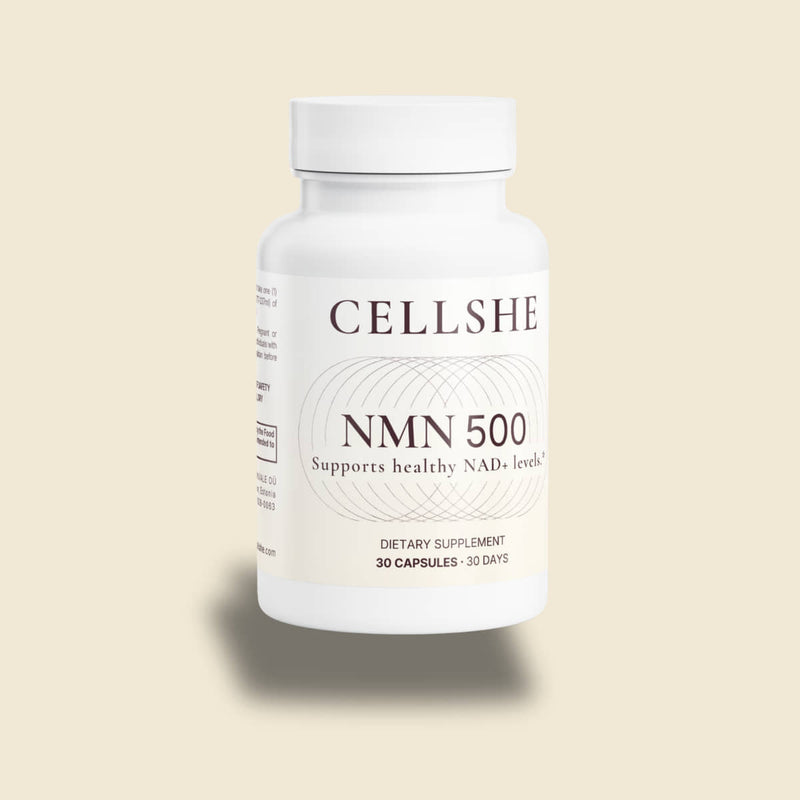
Our NMN 500 → provides 500 mg of beta-nicotinamide mononucleotide per capsule as a single active ingredient and is third-party tested, formulated to support NAD+ biosynthesis.* A Certificate of Analysis is available on the product page or on request.
Not sure where to begin? Our free Cellular Age Check is a simple 2-minute starting point: take the free Cellular Age Check →
No. NAD+ is a coenzyme your cells use for energy metabolism, and "NAD+ supplements" supply a precursor like NMN or NR.* NAC (N-acetylcysteine) is a form of the amino acid cysteine that the body uses to make glutathione. They share letters, not chemistry.
No. NAC feeds the cysteine-and-glutathione pathway, not the NAD+ pathway. If your goal is NAD+ support, a precursor such as β-NMN or nicotinamide riboside is the relevant category, NAC is not a NAD+ precursor.
Neither is better in the abstract; they do different things. A NAD+ precursor targets cellular energy and the NAD+ pathway,* while NAC is taken for antioxidant or glutathione support.* Choose based on your goal, not on which sounds more advanced.
Because they act on different pathways, some people use both. There's no requirement to, and stacking supplements is a good moment to check with your clinician, especially if you take medication, have a health condition, or are pregnant or nursing.
Largely the acronyms, NAD, NAD+, NADH, and NAC all sit in the same longevity-and-antioxidant corner of the supplement aisle. The overlap is in the letters, not the biology, so it's worth reading the label carefully before you buy.
Cellular energy
NMN 500
500 mg β-NMN per capsule, a dose studied directly in humans. Supports NAD+ biosynthesis.*
From $39/month or $49 once · pause or cancel anytime
See NMN 500 →Join the routine.
Science notes and the occasional honest offer. About twice a month, no noise.
By signing up you agree to receive emails from CELLSHE. See our Privacy Policy.
You're in. Watch your inbox for the next one.
Hmm, that didn't go through. Please try again, or email hello@cellshe.com.
*These statements have not been evaluated by the Food and Drug Administration. This product is not intended to diagnose, treat, cure, or prevent any disease.
This content is for educational purposes only and is not medical advice. CELLSHE products are dietary supplements. Consult your healthcare provider before starting any new supplement, especially if you are pregnant, nursing, taking medication, or managing a medical condition.
Continue the Journal
NMN & NAD+
· 8 min readNAD is the shorthand; NAD+ and NADH are the same coenzyme in two states, oxidized and reduced. Here's the difference, and what the human research shows...
Read article
NMN & NAD+
· 12 min readHuman NMN trials show a clearer effect on NAD-related biomarkers than on day-to-day feelings. Here is what realistic results look like, what studies measured at common...
Read article
NMN & NAD+
· 10 min readDavid Sinclair popularized NMN for longevity - largely on mouse studies and his own daily use. Here is what he actually claims, what human trials show,...
Read article