
NAD+ has real benefits because it is essential to how cells make energy and run maintenance pathways. The human supplementation evidence is clearest for one step earlier: oral NMN and NR repeatedly raise circulating NAD+, and several NMN trials have also reported improvements in muscle insulin sensitivity, walking performance, muscle function, or sleep-related measures in defined groups.[2][4][5][6]
The pattern is useful rather than mysterious: raising NAD+ is well established; human health benefits are selective and depend on the outcome and population studied. Weight loss, broad glucose control, cognition, and a predictable feeling of extra energy have not emerged as consistent effects across trials.[9][14]
Two NAD+ jobs are worth remembering
NAD+ is nicotinamide adenine dinucleotide, a coenzyme present throughout human cells. Its importance comes from two jobs that connect directly to normal cellular function.
1. NAD+ carries electrons through energy metabolism
NAD+ accepts and transfers electrons in the reactions that break down carbohydrates, fats, and other fuels. Those redox reactions feed the pathways cells use to produce ATP, the chemical energy that powers cellular work.[1]
This is why “cellular energy metabolism” is a description of NAD+ biology. For the deeper chemistry, see What Is NAD+?
2. Cells spend NAD+ on maintenance and signaling enzymes
NAD+ is also consumed by enzymes including sirtuins, PARPs, and CD38. These enzyme families participate in processes such as DNA-damage responses, cellular signaling, stress responses, and metabolic regulation.[1]
That biology explains why researchers are interested in NAD+ during aging. The next question is more practical: when researchers raise NAD+ in people, which measurable outcomes actually improve?
CELLSHE EVIDENCE MAP
The human NAD+ benefit map
| Outcome | What human studies show | Where the signal appeared | What to remember |
|---|---|---|---|
| Circulating NAD+ | Repeated increases with oral NMN and NR. A 2026 head-to-head trial found both raised whole-blood NAD+ comparably after 14 days. | Healthy adults and middle-aged or older adults across several trials. | This is the most reproducible human effect.[2][3][10] |
| Muscle insulin sensitivity | NMN improved insulin-stimulated glucose disposal and muscle insulin signaling after 10 weeks. | Postmenopausal women with prediabetes who were overweight or obese. | A strong metabolic result in a clearly defined population.[5] |
| Physical function | Several NMN trials reported gains in six-minute walk distance, gait speed, grip performance, or four-meter walk time. The exact tests and strength of findings differed. | Healthy middle-aged and older adults. | Physical function is one of the more repeatedly positive NMN outcome areas.[4][6][7] |
| Sleep and daytime function | Two older-adult NMN trials reported improvements in sleep-related or daytime-function measures. | Older adults in 12-week randomized trials. | An early secondary signal that deserves larger replication.[7][8] |
| Blood pressure and arterial function | Early NR and NMN trials produced exploratory vascular signals, but later trials and pooled results have been inconsistent. | Middle-aged and older adults, including adults with elevated blood pressure. | Vascular findings remain inconsistent across trials.[9][10][13] |
| Cognition | In a small trial in older adults with mild cognitive impairment, NR substantially raised blood NAD+ while cognitive scores remained stable. | 20 older adults with mild cognitive impairment. | Raising blood NAD+ has not yet translated into a clear cognitive benefit.[14] |
| Weight and broad metabolic labs | A 2026 NMN meta-analysis found no significant pooled change in body weight, BMI, fasting glucose, HbA1c, lipids, or systolic blood pressure. | Adults across 15 trials, with varying health status and doses. | Current pooled trials support NAD+ target engagement much more clearly than weight or broad glucose effects.[9] |
CELLSHE interpretation: the strongest human evidence is for NAD+ target engagement. Among health outcomes, NMN has produced the clearest positive signals in selected metabolic and physical-function settings. The broader clinical picture remains outcome-specific rather than all-purpose.
The strongest metabolic finding comes from postmenopausal women with prediabetes
One of the most informative NMN trials studied 25 postmenopausal women with prediabetes who were overweight or obese. Participants received 250 mg of NMN per day or placebo for 10 weeks.[5]
The researchers measured insulin sensitivity with a hyperinsulinemic-euglycemic clamp, a rigorous method for measuring how effectively insulin drives glucose into tissues. NMN increased insulin-stimulated glucose disposal and improved skeletal-muscle insulin signaling compared with placebo.[5]
That is a real human metabolic benefit, and it matters because it was measured directly rather than inferred from a pathway.
It also has a clear boundary. This was a small trial in a defined metabolic-risk group. When NMN trials are pooled across broader adult populations, fasting glucose, HbA1c, body weight, BMI, lipids, and systolic blood pressure do not show consistent improvement.[9]
For a midlife reader, the useful lesson is that NAD-targeting interventions may matter more in some physiological contexts than others. A positive result in insulin-resistant postmenopausal women is meaningful without becoming a promise for every healthy adult.
NR trials reinforce that context matters. In obese, insulin-resistant men, 2,000 mg of NR per day for 12 weeks raised NAD-related metabolites but did not improve insulin sensitivity, glucose metabolism, body composition, or resting energy expenditure. A related skeletal-muscle analysis found no improvement in mitochondrial respiration, content, or morphology.[11][12]
Physical function is one of the more encouraging NMN outcome areas
Several randomized NMN trials have reported positive physical-function signals, although they did not all use the same test.
In 80 healthy middle-aged adults, 300, 600, or 900 mg of NMN daily for 60 days increased blood NAD+. All three NMN groups also improved six-minute walking distance more than placebo, with the longest distances in the 600 and 900 mg groups.[4]
In healthy older men, 250 mg per day for 6 or 12 weeks increased whole-blood NAD+ and produced nominal improvements in gait speed and left-hand grip performance. Body composition did not change.[6]
A separate 12-week trial in 60 older adults used a stepping test as its primary physical outcome. That primary test did not improve versus placebo, but four-meter walking time improved as a secondary outcome.[7]
Taken together, the physical-function evidence is encouraging across several different tests rather than one repeated endpoint. Walking-related measures are among the most recurrent positive human signals, while the exact endpoint and strength of the effect vary between studies.
For the ingredient-specific trial map, see NMN Benefits: What the Research Actually Shows. Explore the full NMN evidence in our NMN for Women guide.
Sleep and daytime function have shown early positive signals
Sleep is not usually the first outcome associated with NAD+ biology, but two randomized NMN trials in older adults reported useful signals.
In a 12-week study of 108 older adults, researchers compared 250 mg of NMN taken in the morning or evening with matching placebo schedules. The timing analysis found improvements in drowsiness and lower-limb function, with the evening NMN group showing the clearest pattern for some measures.[8]
In the 60-person trial described above, NMN also improved Pittsburgh Sleep Quality Index measures for daytime dysfunction and global sleep quality compared with placebo.[7]
These findings make sleep-related function a reasonable research lead. Both came from secondary or timing-specific analyses, so larger replication would make the conclusion stronger.
What about blood pressure and vascular health?
The vascular evidence is mixed.
A six-week crossover trial of NR in healthy middle-aged and older adults confirmed strong NAD+ target engagement and produced preliminary signals in systolic blood pressure and arterial stiffness. The physiological findings were exploratory rather than definitive.[10]
Later work has been less convincing. In a 2025 pilot trial of sedentary adults aged 55 or older with elevated blood pressure, adding 1,000 mg per day of NR to supervised walking did not reduce the primary daytime systolic blood-pressure outcome more than placebo plus walking.[13]
The 2026 NMN meta-analysis reached a similar practical conclusion: systolic blood pressure did not improve significantly overall, while diastolic pressure showed a small pooled reduction.[9]
Vascular health remains an active research area, with less consistent human evidence than NAD+ target engagement or the stronger NMN physical-function signals.
Does raising NAD+ improve memory or cognition?
Human cognitive trials have not yet shown a clear benefit.
A randomized trial in 20 older adults with mild cognitive impairment found that NR increased blood NAD+ about 2.6-fold over 10 weeks. Cognitive measures, including the Montreal Cognitive Assessment, did not improve compared with placebo.[14]
That result is useful because it separates two questions cleanly. NR reached the biochemical target, while the measured cognitive outcomes stayed unchanged during that trial.
Researchers continue to study NAD+ biology in the brain. For now, a higher blood NAD+ value should be read as target engagement rather than evidence of improved memory.
Does NAD+ give you more energy?
NAD+ is essential for cellular energy metabolism. A predictable feeling of extra energy is a different claim.
Your cells need NAD+/NADH cycling to process fuel and produce ATP. That biochemical role is foundational and well established.[1]
Human precursor trials have not established a consistent stimulant-like rise in subjective energy. Some studies report better general-health, fatigue, or functional measures, while many trials do not measure “energy” as a direct endpoint at all.[4][17]
So the useful distinction is simple: NAD+ supports the chemistry cells use to make energy; taking an NAD+ precursor does not guarantee that you will feel more energetic.
What do NAD+ benefits mean for healthy aging?
NAD+ belongs in serious aging biology because it connects metabolism, redox balance, cellular signaling, and enzymes involved in stress responses and DNA repair.[1][18]
Human supplementation research has now moved beyond “can we raise NAD+?” The answer to that question is yes for NMN and NR. Researchers are now identifying which people and outcomes respond enough to matter.
The strongest current reading is constructive: NAD+ precursors are biologically active in humans, and selected metabolic, physical-function, sleep, and vascular outcomes have moved in trials. The effects are not broad enough to call NAD+ boosting a general anti-aging treatment.[17]
Does NAD+ fall as you get older?
The old “NAD+ simply falls with age” story is too broad.
A 2026 Nature Metabolism study examined whole-blood NAD+ across seven human cohorts and found no clear age-related decline. The same study showed that NAD+ remained responsive to precursor supplementation.[15]
Other tissues can tell a different story. Older men with sarcopenia have shown reduced muscle NAD+ and NAD+-biosynthetic capacity compared with age-matched healthy controls.[16]
Blood, muscle, and other tissues should not be collapsed into one “NAD+ level.” Our dedicated NAD+ Levels by Age review maps the human evidence by biological compartment.
What is the best-supported way to raise NAD+ in human studies?
For oral supplementation, NMN and NR have the strongest repeated human evidence for increasing circulating NAD+.
A 2026 randomized head-to-head study in 65 healthy adults directly compared NMN, NR, nicotinamide, and placebo for 14 days. NMN and NR comparably increased whole-blood NAD+, while nicotinamide did not produce the same sustained change.[2]
That result strengthens what earlier trials had already shown separately for NMN and NR.[3][10]
Direct oral NAD+ is newer. One short 2026 randomized trial found that a proprietary oral NAD+ formulation increased intracellular whole-blood NAD+ after five days, but clinical outcomes were not established in that study.[19] That makes it an emerging route rather than the main evidence base.
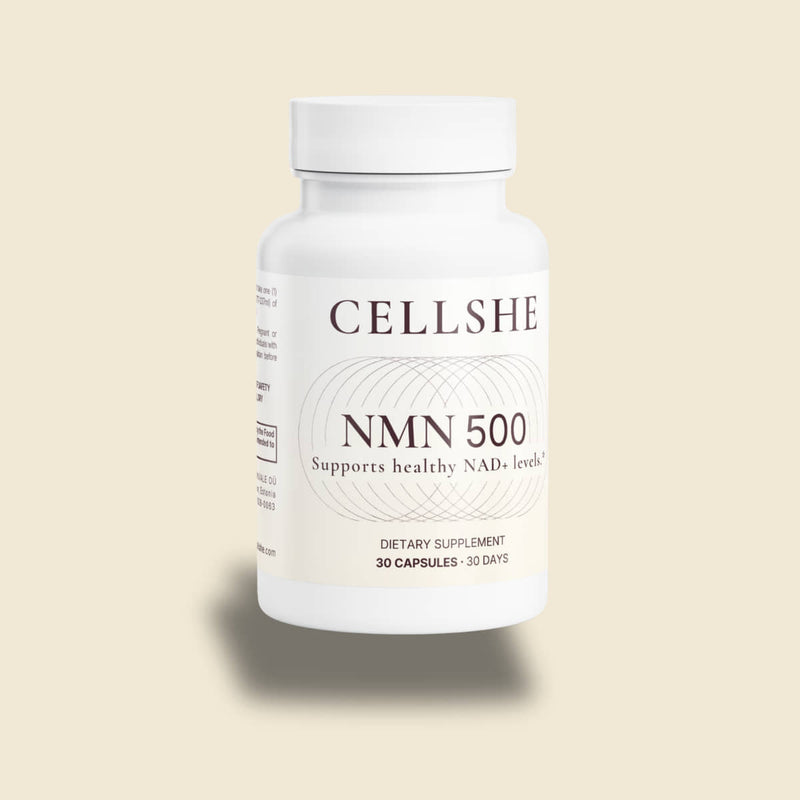
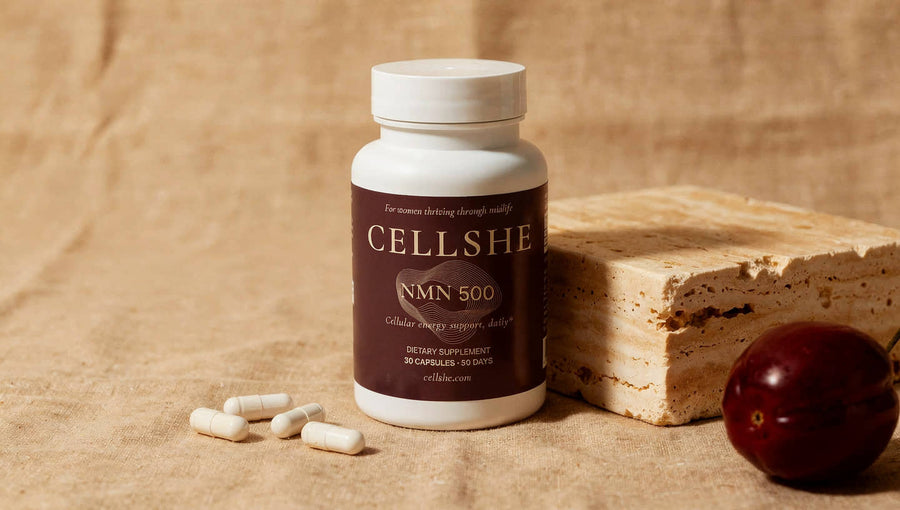
CELLSHE currently uses the precursor route in its own range. NMN 500 provides 500 mg of beta-NMN per capsule as its single active ingredient. The trials cited in this article test NMN as an ingredient, not the finished CELLSHE product.
If you are deciding between forms or evaluating a product, use our separate NAD+ Supplements buyer guide. For a direct NMN-versus-NR comparison, see NMN vs NR.
CELLSHE TOOL
The NAD+ Benefits Memory Card
1. NAD+ has two core jobs.
It carries electrons through energy metabolism and serves as a substrate for NAD-dependent enzymes.
2. NMN and NR reliably raise NAD+.
This is the most repeatable human supplementation finding, including a 2026 head-to-head trial.[2]
3. Human benefits are selective.
Positive NMN findings include muscle insulin sensitivity in a defined postmenopausal group and several physical-function signals.[5][4]
4. Target engagement and health outcomes are separate.
Weight, broad glucose markers, cognition, and blood pressure have shown less consistent change across trials.[9][14]
5. Age is tissue-specific.
Whole-blood NAD+ did not decline with age across seven cohorts, while muscle findings differ in sarcopenia.[15][16]
If you remember one sentence:
NAD+ biology is foundational; human supplementation benefits are real, selective, and easiest to understand outcome by outcome.
CELLSHE synthesis based on the human trials and reviews cited throughout this article.
How to read the next NAD+ benefit claim you see
Ask one question first: what changed in people?
If the answer is “blood NAD+,” that is useful target-engagement evidence. If the answer is walking distance, clamp-measured insulin sensitivity, sleep quality, blood pressure, or cognition, you are looking at a human outcome.
Then check who was studied. A result in postmenopausal women with prediabetes can be highly relevant to that group without becoming a universal effect. A result in older men does not automatically describe healthy women in midlife.
If you are considering blood testing, our NAD+ Blood Test guide explains why the biological matrix and assay matter.
So what are the real benefits of NAD+?
NAD+ is indispensable to cellular energy metabolism and NAD-dependent maintenance pathways. In humans, NMN and NR reliably raise circulating NAD+, and NMN has produced several credible metabolic and physical-function benefits in defined populations.
The most useful way to read this field in 2026 is outcome by outcome. Muscle insulin sensitivity has improved in a carefully measured trial of postmenopausal women with prediabetes. Walking and other physical-function measures have improved in several NMN studies. Sleep-related signals have appeared in older adults. Broad weight, glucose, blood-pressure, and cognitive benefits are far less consistent.
That is the useful picture in 2026. NAD+ is established cellular biology, and raising it is a targeted intervention whose human effects differ by outcome. The research now shows where the first meaningful benefits are appearing and where stronger replication is still needed.
References
- Covarrubias AJ, Perrone R, Grozio A, Verdin E. (2021). NAD+ metabolism and its roles in cellular processes during ageing. Nature Reviews Molecular Cell Biology. PMID: 33353981. PubMed.
- Christen S, et al. (2026). The differential impact of three different NAD+ boosters on circulatory NAD and microbial metabolism in humans. Nature Metabolism. PMID: 41540253. DOI: 10.1038/s42255-025-01421-8. PubMed.
- Okabe K, et al. (2022). Oral Administration of Nicotinamide Mononucleotide Is Safe and Efficiently Increases Blood Nicotinamide Adenine Dinucleotide Levels in Healthy Subjects. Frontiers in Nutrition. PMID: 35479740. DOI: 10.3389/fnut.2022.868640. PubMed.
- Yi L, et al. (2023). The efficacy and safety of β-nicotinamide mononucleotide supplementation in healthy middle-aged adults: a randomized, dose-dependent clinical trial. GeroScience. PMID: 36482258. DOI: 10.1007/s11357-022-00705-1. PubMed.
- Yoshino M, et al. (2021). Nicotinamide mononucleotide increases muscle insulin sensitivity in prediabetic women. Science. PMID: 33888596. DOI: 10.1126/science.abe9985. PubMed.
- Igarashi M, et al. (2022). Chronic nicotinamide mononucleotide supplementation elevates blood nicotinamide adenine dinucleotide levels and alters muscle function in healthy older men. npj Aging. PMID: 35927255. DOI: 10.1038/s41514-022-00084-z. PubMed.
- Morifuji M, et al. (2024). Ingestion of β-nicotinamide mononucleotide increased blood NAD levels, maintained walking speed, and improved sleep quality in older adults in a double-blind randomized, placebo-controlled study. GeroScience. PMID: 38789831. DOI: 10.1007/s11357-024-01204-1. PubMed.
- Kim M, et al. (2022). Effect of 12-week intake of nicotinamide mononucleotide on sleep quality, fatigue, and physical performance in older Japanese adults: a randomized, double-blind placebo-controlled study. Nutrients. PMID: 35215405. DOI: 10.3390/nu14040755. PubMed.
- Yang W, et al. (2026). Safety and Metabolism-Related Outcomes of Oral Nicotinamide Mononucleotide Supplementation in Adults: A Systematic Review and Meta-Analysis. Nutrients. PMID: 42514320. DOI: 10.3390/nu18142251. PubMed.
- Martens CR, et al. (2018). Chronic nicotinamide riboside supplementation is well-tolerated and elevates NAD+ in healthy middle-aged and older adults. Nature Communications. PMID: 29599478. DOI: 10.1038/s41467-018-03421-7. PubMed.
- Dollerup OL, et al. (2018). A randomized placebo-controlled clinical trial of nicotinamide riboside in obese men: safety, insulin sensitivity, and metabolic outcomes. The American Journal of Clinical Nutrition. PMID: 29992272. DOI: 10.1093/ajcn/nqy132. PubMed.
- Dollerup OL, et al. (2020). Nicotinamide riboside does not alter mitochondrial respiration, content or morphology in skeletal muscle from obese and insulin-resistant men. The Journal of Physiology. PMID: 31710095. DOI: 10.1113/JP278752. PubMed.
- Lin Y, et al. (2025). Nicotinamide riboside combined with exercise to treat hypertension in middle-aged and older adults: a pilot randomized clinical trial. GeroScience. PMID: 40770531. DOI: 10.1007/s11357-025-01815-2. PubMed.
- Orr ME, et al. (2024). Nicotinamide riboside supplementation in older adults with mild cognitive impairment: a randomized clinical trial. GeroScience. PMID: 37994989. DOI: 10.1007/s11357-023-00999-9. PubMed.
- Trętowicz MM, et al. (2026). Human whole-blood NAD+ levels do not vary with age or lifestyle interventions. Nature Metabolism. PMID: 42135539. DOI: 10.1038/s42255-026-01537-5. PubMed.
- Migliavacca E, et al. (2019). Mitochondrial oxidative capacity and NAD+ biosynthesis are reduced in human sarcopenia across ethnicities. Nature Communications. PMID: 31862890. DOI: 10.1038/s41467-019-13694-1. PubMed.
- Gallagher C, Emmanuel E. (2026). NAD+ supplementation for anti-aging and wellness: a systematic review of human intervention studies. Ageing Research Reviews. PMID: 41655607. DOI: 10.1016/j.arr.2026.103057. PubMed.
- Bhasin S, et al. (2023). Nicotinamide Adenine Dinucleotide in Aging Biology: Potential Applications and Many Unknowns. Endocrine Reviews. PMID: 37364580. DOI: 10.1210/endrev/bnad019. PubMed.
- Kornilov SA, et al. (2026). Oral LNAD+ rapidly elevates whole blood intracellular NAD and metabolic flux without elevating plasma NAD: evidence from a randomized controlled trial. GeroScience. PMID: 42530810. DOI: 10.1007/s11357-026-02399-1. PubMed.