
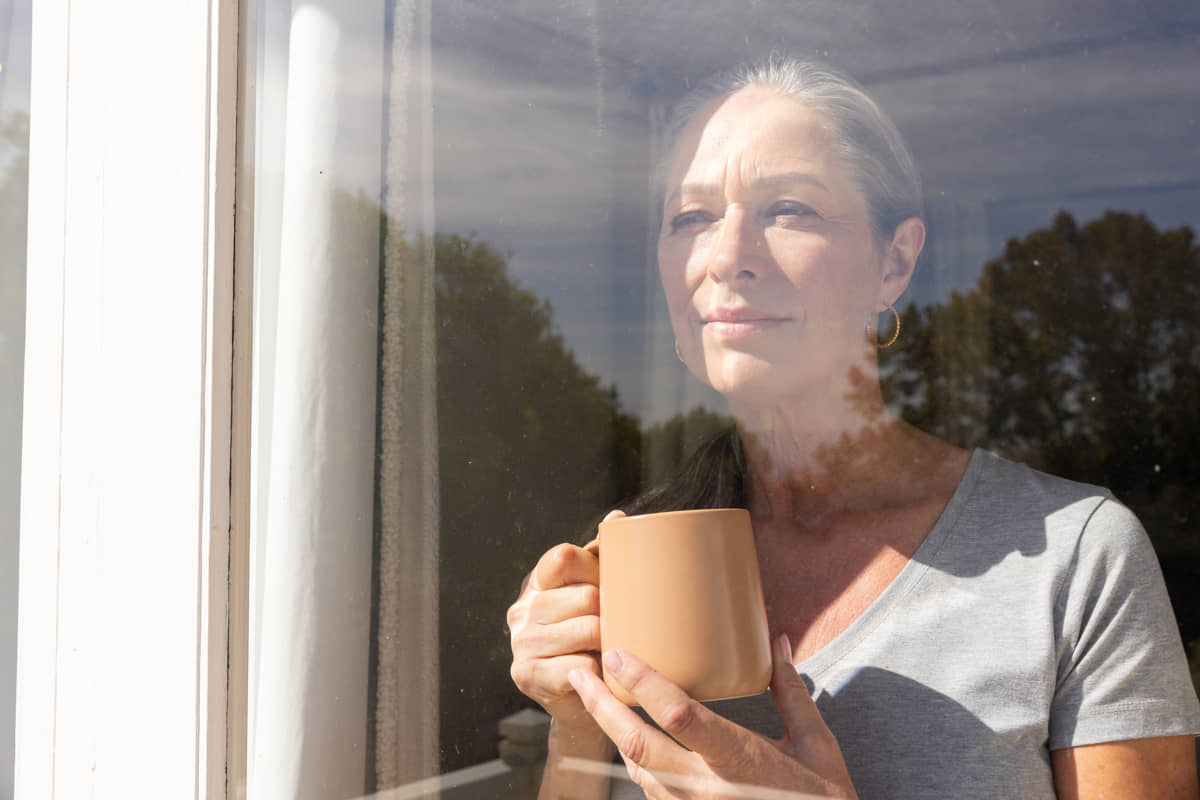
Fatigue can become more noticeable during perimenopause. Sleep disruption is one of the clearest contributors, especially when night sweats or repeated waking are involved. Heavier periods can also deplete iron stores. Mood changes, sleep apnea, thyroid disease, medications and other health problems can add to the same feeling of exhaustion.
The most useful place to start is the pattern: when the fatigue hits, how you slept, whether your bleeding changed, and what else is happening at the same time.
Fatigue was among the commonly reported symptoms in a longitudinal study of 8,623 Australian women ages 45 to 50, and tiredness became more prominent for some women moving through the menopause transition.[1] Fatigue alone cannot tell you whether perimenopause is the cause. For the wider picture of stages, symptoms and treatment options, see the CELLSHE Perimenopause and Menopause Guide.
What can perimenopause fatigue feel like?
Women describe midlife fatigue in different ways. You may wake after a full night in bed and still feel depleted. You may feel physically heavy, lose stamina for ordinary tasks, struggle to concentrate, or hit a sharp afternoon slump. Some women notice that the worst days cluster around their period.
It also helps to separate fatigue from sleepiness. Sleepiness is the tendency to doze off. Fatigue is a broader sense of exhaustion or reduced capacity, and rest does not always fix it.[10]
“Crashing fatigue” is a phrase many women use online for a sudden wave of exhaustion. It has no formal diagnostic definition. If the episodes are severe or keep recurring, timing and accompanying symptoms are more useful than the label itself.
Why can fatigue get worse during perimenopause?
Broken sleep can follow you into the next day
Sleep disturbance becomes more common across the menopause transition, with waking during the night one of the best-supported patterns. In the longitudinal SWAN study, 3,045 women ages 42 to 52 were followed across annual assessments, and sleep difficulties increased as women moved through the transition.[2]
Night sweats are one route to a bad night. Sleep disruption can also occur without them. The 2026 International Menopause Society recommendations describe nighttime vasomotor symptoms as strongly associated with awakenings and identify wakefulness after sleep onset as a common menopause-related sleep problem.[3]
If your fatigue reliably follows fragmented nights, the sleep problem deserves attention first. Cognitive behavioral therapy for insomnia, or CBT-I, is a first-line treatment for insomnia across the menopause transition in current IMS guidance. NICE also recommends considering menopause-specific CBT for sleep problems associated with vasomotor symptoms.[3][4] When hot flashes or night sweats are repeatedly waking you, treating those symptoms can also improve sleep.
Heavier periods can drain iron stores
Periods often become less predictable during perimenopause, and bleeding can become heavier or last longer. ACOG advises discussing these bleeding changes with a clinician because heavy blood loss can lead to iron-deficiency anemia and may also have a gynecologic cause that needs treatment.[5]
Iron depletion can matter before hemoglobin falls into the anemic range. In a randomized trial of 198 menstruating women with fatigue, normal hemoglobin and ferritin below 50 micrograms per liter, 12 weeks of oral iron reduced measured fatigue more than placebo.[6] The trial enrolled women who already had low iron stores. When the bleeding history fits, investigating iron status is more useful than taking iron on assumption.
If your periods became much heavier around the same time your energy dropped, mention both changes together at your appointment.
Mood and other health problems can add to the exhaustion
Depression and anxiety can make fatigue feel intensely physical. A 2024 systematic review of 17 prospective cohorts found higher odds of depressive symptoms or diagnoses during perimenopause than premenopause.[7] Persistent low mood, loss of interest, anxiety or major changes in function deserve their own assessment.
Sleep apnea also becomes more relevant through midlife. In a longitudinal study of 219 women who underwent repeated home sleep studies, sleep-disordered breathing severity increased as women progressed through menopause, even after accounting for age and body measurements.[8] Loud snoring, witnessed pauses or gasping, morning headaches, or consistently unrefreshing sleep are useful clues to raise with a clinician.
Thyroid disease can overlap with menopause symptoms too. A 2024 European Menopause and Andropause Society position statement highlights the diagnostic overlap between thyroid disorders and menopause in women in their later reproductive years.[9] Medication effects, recent illness, pain, restrictive eating and other medical conditions can also contribute to fatigue. A targeted history is usually more useful than ordering a broad panel of tests without a reason.[10]
Does fatigue get worse before your period?
It can follow a cycle pattern for some women. In the Seattle Midlife Women’s Health Study, 290 women in the late reproductive stage or early menopause transition completed daily symptom records across at least one full cycle. Several symptom groups were worse before menstruation than after it, although the study did not isolate fatigue as a stand-alone endpoint.[11]
If you keep noticing the same dip before a period, track it across one or two cycles. A repeatable pattern is more useful than trying to reconstruct the month from memory.
What actually helps with perimenopause fatigue?
Start with the strongest clue you have and address that problem directly.
| Your pattern | What deserves attention |
|---|---|
| Repeated waking, night sweats or unrefreshing sleep | Address insomnia and the cause of nighttime waking. CBT-I is an evidence-based option for insomnia. |
| Much heavier or longer periods | Discuss the bleeding and possible iron deficiency with a clinician. |
| Fatigue repeatedly worsening around your period | Track the timing across one or two cycles and bring the pattern to an appointment if it is disruptive. |
| Low mood, anxiety or loss of interest alongside fatigue | Include mood symptoms in the health conversation rather than treating energy as an isolated problem. |
| Snoring, gasping or consistently unrefreshing sleep | Ask whether assessment for sleep apnea is appropriate. |
| Persistent fatigue with no clear pattern | Arrange a clinical review so history, medications, sleep, mood and relevant testing can be considered together. |
Regular physical activity still matters for sleep, mood, strength and long-term health. On very tired weeks, the useful goal may be to keep moving at a level you can recover from rather than forcing a harder session. If you want a structured resistance program, the CELLSHE 12-week strength plan for women over 50 gives a practical starting point.
Supplements should follow the same logic. Correcting an established deficiency, such as low iron stores, is a different decision from taking a generic “energy” formula. For a broader review of magnesium, vitamins, soy and other common products, see Perimenopause Supplements: What the Evidence Supports.
Try a 2-week fatigue pattern check
CELLSHE TOOL
| Track | What to record |
|---|---|
| Sleep | Good, broken or poor. Add night sweats if they woke you. |
| Morning | Refreshed, somewhat tired or exhausted. |
| Worst fatigue | Morning, afternoon or evening. |
| Period | No bleeding, usual bleeding or much heavier than usual. |
| Mood | Usual, noticeably lower or noticeably more anxious. |
| Impact | Did fatigue stop you doing something you would normally do? |
Optional note: record a recent illness, medication change, travel, alcohol, or a much harder day than usual when it may explain the result.
After two weeks, look for four things:
- Does the worst fatigue consistently follow broken sleep?
- Does it cluster around bleeding, especially heavier periods?
- Does it return at a similar point in your cycle?
- Is it still substantial when no clear pattern appears?
CELLSHE synthesis based on the clinical patterns and evidence reviewed in this article. This tracker is for pattern recognition and is not a diagnostic test.
When does fatigue deserve medical attention?
Make an appointment when fatigue lasts for several weeks, keeps getting worse, starts limiting normal work or daily activity, or has no clear explanation. Heavier or prolonged bleeding, consistently unrefreshing sleep, major mood changes, or other new symptoms are also worth discussing.
Clinical evaluation should be guided by your history, examination and likely causes. Primary-care guidance on fatigue recommends reviewing sleep, mood, medications and other symptoms before choosing tests, because broad testing without a clinical reason has a low yield.[10]
Seek urgent medical care if severe fatigue comes with chest pain, severe shortness of breath, fainting, sudden neurologic symptoms, or very heavy bleeding with marked weakness, dizziness or near-fainting.
Does perimenopause fatigue go away?
There is no reliable countdown. The course depends on what is driving the fatigue.
Sleep-related exhaustion can improve when sleep improves. Fatigue linked to iron deficiency can improve when the deficiency and the cause of blood loss are treated. Mood-related fatigue follows its own course. Persistent exhaustion with no clear explanation is a reason to look more closely rather than wait for the menopause transition to finish.
Perimenopause is useful context when new fatigue appears in midlife. The next clues usually come from your sleep, your periods, the timing of the fatigue and the symptoms that travel with it. If you are still trying to work out whether your wider pattern fits the transition, use the CELLSHE Perimenopause Quiz. For the full stage, symptom and treatment picture, return to the Perimenopause and Menopause Guide.
Scientific References
- Brown WJ, Mishra GD, Dobson A. Changes in physical symptoms during the menopause transition. International Journal of Behavioral Medicine. 2002;9(1):53-67. PMID: 12112996. PubMed.
- Kravitz HM, Zhao X, Bromberger JT, et al. Sleep disturbance during the menopausal transition in a multi-ethnic community sample of women. Sleep. 2008;31(7):979-990. PMID: 18652093. PubMed.
- International Menopause Society. Recommendations and Key Messages on Women’s Midlife Health and Menopause. Updated 2026. IMS recommendations.
- National Institute for Health and Care Excellence. Menopause: identification and management. NG23. Updated 2024, with subsequent technology updates. NICE recommendations.
- American College of Obstetricians and Gynecologists. Perimenopausal Bleeding and Bleeding After Menopause; Heavy Menstrual Bleeding. ACOG.
- Vaucher P, Druais PL, Waldvogel S, Favrat B. Effect of iron supplementation on fatigue in nonanemic menstruating women with low ferritin: a randomized controlled trial. CMAJ. 2012;184(11):1247-1254. PMID: 22777991. PubMed.
- Badawy Y, Spector A, Li Z, Desai R. The risk of depression in the menopausal stages: a systematic review and meta-analysis. Journal of Affective Disorders. 2024;357:126-133. PMID: 38642901. PubMed.
- Mirer AG, Young T, Palta M, et al. Sleep-disordered breathing and the menopausal transition among participants in the Sleep in Midlife Women Study. Menopause. 2017;24(2):157-162. PMID: 27760083. PubMed.
- Mintziori G, Veneti S, Poppe K, et al. EMAS position statement: Thyroid disease and menopause. Maturitas. 2024;185:107991. PMID: 38658290. PubMed.
- Latimer KM, Gunther A, Kopec M. Fatigue in Adults: Evaluation and Management. American Family Physician. 2023;108(1):58-69. AAFP.
- Mitchell ES, Woods NF. Menstrual cycle phase, menopausal transition stage, self-reports of premenstrual syndrome and symptom severity: observations from the Seattle Midlife Women’s Health Study. Menopause. 2022;29(11):1269-1278. PMID: 36194847. PubMed.