Short-term human trials have not found that oral nicotinamide mononucleotide, or NMN, raises overall adverse-event rates compared with a control. The best current pooled analysis counted at least one adverse event in 58 of 230 people assigned NMN and 38 of 153 controls. That difference was not statistically significant.[1]
The limit matters as much as the result. The trials lasted 14 days to 24 weeks and studied doses from 250 to 2,000 milligrams per day. They were too small and too short to settle rare reactions, years-long use, most drug interactions, pregnancy, or safety during cancer treatment.
Evidence reviewed through September 1, 2026.
The short answer on NMN safety
- Overall adverse events: no increase was detected across 10 randomized trials in the 2026 safety analysis.
- Common NMN side effects: current human evidence does not establish a consistent NMN-specific symptom pattern.
- Long-term safety: unresolved beyond 24 weeks of randomized trial follow-up.
- Higher-risk situations: active cancer treatment, pregnancy, chronic liver or kidney disease, and complex medication use were not adequately studied.
What the strongest safety analysis found
A 2026 systematic review pooled 15 randomized controlled trials of oral NMN or closely related NMN preparations. Ten trials contributed adverse-event data. The authors analyzed events whether or not investigators thought NMN caused them.[1]
CELLSHE EVIDENCE MAP
Scope of the pooled NMN safety evidence
| Evidence measure | What was reviewed |
|---|---|
| Trials | 10 trials contributed to the pooled adverse-event analysis. |
| Daily dose | 250 to 2,000 mg across the reviewed trials. |
| Treatment duration | 14 days to 24 weeks, not long-term follow-up. |
| Outcome | NMN group | Control group | Pooled risk difference | Interpretation |
|---|---|---|---|---|
| Any adverse event | 58 of 230 | 38 of 153 | -0.8 percentage points 95% CI: -6.1 to +4.5 |
No detected difference; moderate-certainty evidence |
| Serious adverse event | 7 of 230 | 7 of 153 | -0.3 percentage points 95% CI: -3.6 to +3.1 |
No detected difference; very-low-certainty evidence |
| Stopped because of an adverse event | 2 of 205 | 2 of 136 | -0.1 percentage points 95% CI: -3.6 to +3.4 |
No detected difference |
| Gastrointestinal adverse event | 16 of 168 | 17 of 92 | -4.7 percentage points 95% CI: -12.1 to +2.7 |
No detected difference |
Source: Yang et al., 2026.[1] Participant sets differ by outcome because not every trial reported every category. A 95% confidence interval that crosses zero is compatible with no difference between groups.
Evidence certainty was not equal across outcomes. Using the GRADE framework, the reviewers rated the evidence for any adverse event as moderate certainty and the evidence for serious adverse events as very low certainty.[1] Serious events were sparse, and only two included studies reported at least one. Equal group counts do not rule out an uncommon serious harm.
An event during a trial is not automatically a side effect
An adverse event is any medical problem that happens during a study. It may be related to the study product, unrelated, or impossible to classify. A treatment-related adverse event is one the study team judges to be caused by the intervention. That judgment can be imperfect, but the distinction prevents every headache, cold, or laboratory change from being labeled an NMN side effect.
The 60-day study by Yi and colleagues is a useful example. Among 80 healthy middle-aged adults, researchers recorded nine events in seven participants: six events in five people taking placebo, three events in two people taking 300 milligrams of NMN, and none in the 600- or 900-milligram groups. All were mild or moderate, and investigators judged none to be related to NMN.[2]
What symptoms have human trials reported?
The trials recorded gastrointestinal, nervous-system, skin or allergic, infection-related, musculoskeletal, and other events. The pooled analysis did not find a significant increase with NMN in any analyzed category.[1]
This means the evidence does not support a reliable list of common NMN-specific symptoms. Digestive symptoms and headaches may happen during use, but the current randomized evidence has not shown that NMN causes them more often than control. Flushing is also not established as a characteristic NMN reaction. It should not be imported from the side-effect profile of niacin and presented as if the two ingredients were interchangeable.
At the individual level, a person can still react to NMN, another active ingredient, an excipient, or a contaminated product. A pooled null result cannot tell you what caused a symptom in one person.
What individual NMN trials add
Individual studies help show the populations, formulations, doses, and time frames behind the pooled answer. They also expose why the answer must stay narrow.
| Study | Participants | Dose and duration | Safety finding | Main limit |
|---|---|---|---|---|
| Yi et al., 2023[2] | 80 healthy adults, ages 40 to 65 | 300, 600, or 900 mg/day for 60 days | No treatment-related adverse events; no clinically meaningful safety-lab changes | Short study in selected healthy adults; company-linked authors |
| Fukamizu et al., 2022[3] | 31 healthy adults, ages 20 to 65 | 1,250 mg/day for 4 weeks | Five adverse events; none judged directly related; no meaningful clinical-lab or vital-sign changes | Excluded many chronic conditions, medication use, pregnancy, and cancer history; manufacturer-linked authors |
| Pencina et al., 2023[4] | 32 adults with overweight or obesity, ages 55 to 80 | Microcrystalline NMN formulation at 1,000 or 2,000 mg/day for 14 days | Adverse-event frequency was similar across groups | Tiny, two-week formulation study; does not establish a general 2,000 mg safe limit |
| Nakajima et al., 2025[5] | 30 healthy Japanese adults, ages 20 to 64 | 750 or 1,500 mg/day for 4 weeks | No dropouts and no problematic interview or laboratory findings reported | Small, short study; company-affiliated authors |
| Morifuji et al., 2024[6] | 60 healthy older adults | 250 mg/day for 12 weeks | No adverse events related to the test substance were reported | Healthy volunteer sample and limited duration |
Other randomized studies in postmenopausal women with prediabetes, older men, healthy middle-aged adults, amateur runners, and older adults also contribute to the short-term human evidence base.[7][8][9][10][11] Most were designed to measure efficacy outcomes, not to detect rare harms. None resolves long-term safety.
Women weighing safety can go deeper in our NMN for women guide, which looks at the female NMN trials together instead of relying only on mixed-adult safety data.
Several NMN trials involved supplement manufacturers, patent holders, or company-employed authors. Those ties do not invalidate the findings, but they increase the value of independent replication and complete adverse-event reporting.
What the trials cannot rule out
Rare side effects
Several hundred participants can detect common patterns, but not events that occur in one person out of thousands. The confidence intervals in the pooled analysis still allow for a modest increase or decrease in risk.
Long-term NMN side effects
Twenty-four weeks was the longest randomized treatment period in the 2026 review. There is no human trial basis for calling years or decades of daily use safe.
Drug and supplement interactions
Many early trials excluded people taking medications. Human research has not produced a comprehensive NMN interaction map. “No interaction is documented” does not mean “no interaction is possible.” A pharmacist can assess the full combination better than an ingredient-by-ingredient web search.
Every finished product
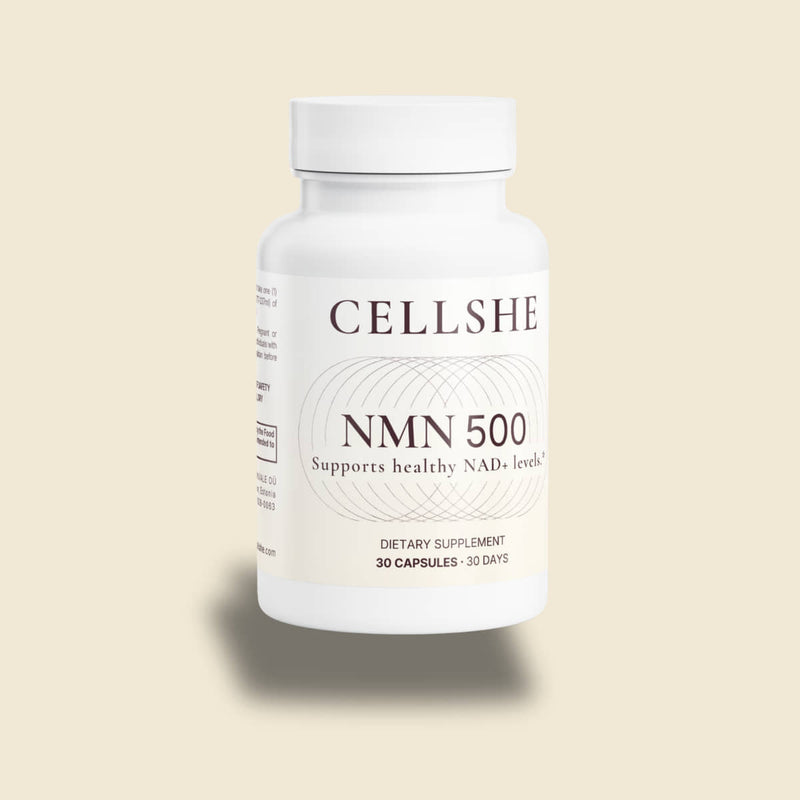
Ingredient trials do not validate every supplement sold as NMN. Finished products can differ in dose accuracy, other active ingredients, excipients, storage, and contamination risk. CELLSHE NMN 500 provides 500 milligrams of beta-NMN in one capsule, prints every excipient, and makes third-party testing with a certificate of analysis available. Those controls help answer what is in the finished product. They do not turn ingredient trials into product-specific clinical evidence.
Does NMN cause cancer?
No human trial has shown that NMN causes cancer. Human NMN trials were also not designed or long enough to measure cancer incidence, so it is too strong to say they prove NMN cannot affect cancer biology.
A 2026 laboratory study deserves careful placement. In pancreatic ductal adenocarcinoma cell models, NMN protected cancer cells against oxaliplatin, 5-fluorouracil, and gemcitabine. In mouse models, NMN and nicotinamide supported tumor growth and chemotherapy resistance.[12] This was not a human supplement trial. It does not show that NMN causes cancer in cancer-free people, and it cannot be generalized to every cancer.
The practical boundary is narrower: if you have active cancer, are receiving chemotherapy, or are being evaluated for a possible recurrence, discuss NMN with your oncology team before using it. That caution follows from a meaningful preclinical signal and a lack of human treatment-safety data, not proof of harm in people.
What about the liver, kidneys, and blood pressure?
Liver
The 2026 meta-analysis did not find significant pooled increases in alanine aminotransferase or aspartate aminotransferase, two commonly measured liver enzymes.[1] Several trials also found no clinically meaningful liver-test pattern in their selected participants. This is reassuring for short-term use in the studied groups, but it is not proof of safety in chronic liver disease.
Kidneys
Short trials that included blood chemistry and urinalysis did not identify a clear kidney safety signal in healthy participants.[3] People with renal disease were often excluded, so the evidence cannot establish safety in chronic kidney disease.
Blood pressure
Trials monitored vital signs, and the pooled evidence did not show a harmful group-level rise in systolic blood pressure.[1] That finding does not make NMN a blood-pressure treatment and does not replace monitoring for someone using antihypertensive medication.
Who should get individual guidance before taking NMN?
Human data are incomplete for several groups because they were excluded or barely represented. Ask a clinician or pharmacist who can review your own history if you:
- have active cancer, are receiving anticancer treatment, or are under evaluation for recurrence;
- are pregnant, breastfeeding, or trying to conceive;
- are under 18;
- have chronic liver or kidney disease;
- take prescription medication or several supplements; or
- have a new symptom that started after adding NMN.
This list reflects evidence gaps. It does not mean harm has been demonstrated in every listed group.
CELLSHE TOOL
NMN Safety Check
| Record | Details |
|---|---|
| Product and brand | |
| Lot number and expiration date | |
| NMN dose per serving | |
| Servings per day | |
| Date started or planned | |
| Full ingredient list attached? | |
| Current medications | |
| Other supplements | |
| Health conditions or treatment | |
| Recent labs to review | |
| Symptom and date it began | |
| What changes when the dose is held? |
Questions for your clinician or pharmacist
- Could this product interact with my medications or supplements?
- Does my health history change the risk?
- What symptoms or laboratory changes should prompt me to stop?
- If I proceed, when should we reassess?
Bring the bottle or a clear label photo. Keep the lot number if you are investigating a reaction.
Before you blame NMN for a symptom
- Record timing. Note the dose, the time taken, when the symptom began, and whether it returned after another dose.
- Check the whole label. Look for other active ingredients, flavors, sweeteners, capsules, and serving-size changes.
- Review other changes. Illness, medication adjustments, alcohol, sleep loss, diet, and another new supplement can confuse the pattern.
- Keep the container. The lot number and expiration date matter if a quality problem or adverse-event report is considered.
- Get qualified help. A clinician or pharmacist can help judge causality and whether evaluation, testing, or discontinuation is appropriate.
For context on why a single “normal NAD+ level by age” is hard to define, see NAD+ Levels by Age. Our broader approach to evidence and testing is described on the CELLSHE Science page.
Conclusion
The current human evidence is reassuring within a limited frame: short-term randomized trials have not detected higher overall or serious adverse-event rates with NMN. Treat dose, duration, population, formulation, and the complete product label as part of the safety question.
This article is educational and is not a substitute for personal medical advice.
References
- Yang W, et al. Safety and Metabolism-Related Outcomes of Oral Nicotinamide Mononucleotide Supplementation in Adults: A Systematic Review and Meta-Analysis. Nutrients. 2026. PMID: 42514320. doi:10.3390/nu18142251.
- Yi L, et al. The efficacy and safety of beta-nicotinamide mononucleotide supplementation in healthy middle-aged adults: a randomized, multicenter, double-blind, placebo-controlled, parallel-group, dose-dependent clinical trial. GeroScience. 2023. PMID: 36482258. doi:10.1007/s11357-022-00705-1.
- Fukamizu Y, et al. Safety evaluation of beta-nicotinamide mononucleotide oral administration in healthy adult men and women. Scientific Reports. 2022. PMID: 36002548. doi:10.1038/s41598-022-18272-y.
- Pencina KM, et al. MIB-626, an Oral Formulation of a Microcrystalline Unique Polymorph of β-Nicotinamide Mononucleotide, Increases Circulating Nicotinamide Adenine Dinucleotide and its Metabolome in Middle-Aged and Older Adults. The Journals of Gerontology: Series A. 2023. PMID: 35182418. doi:10.1093/gerona/glac049.
- Nakajima M, et al. Safety evaluation of repeated oral administration of nicotinamide mononucleotide in healthy Japanese adults. Fundamental Toxicological Sciences. 2025. doi:10.2131/fts.12.67.
- Morifuji M, et al. Ingestion of β-Nicotinamide Mononucleotide Increased Blood NAD Levels, Maintained Walking Speed, and Improved Sleep Quality in Older Adults in a Double-Blind Randomized, Placebo-Controlled Study. GeroScience. 2024. PMID: 38789831. doi:10.1007/s11357-024-01204-1.
- Igarashi M, et al. Chronic nicotinamide mononucleotide supplementation elevates blood nicotinamide adenine dinucleotide levels and alters muscle function in healthy older men. NPJ Aging. 2022. PMID: 35927255.
- Katayoshi T, et al. Nicotinamide adenine dinucleotide metabolism and arterial stiffness after long-term nicotinamide mononucleotide supplementation: a randomized, double-blind, placebo-controlled trial. Scientific Reports. 2023. PMID: 36797393. doi:10.1038/s41598-023-29787-3.
- Yoshino M, et al. Nicotinamide mononucleotide increases muscle insulin sensitivity in prediabetic women. Science. 2021. PMID: 33888596.
- Liao B, et al. Nicotinamide mononucleotide supplementation enhances aerobic capacity in amateur runners. Journal of the International Society of Sports Nutrition. 2021. PMID: 34238308.
- Kim M, et al. Effect of 12-Week Intake of Nicotinamide Mononucleotide on Sleep Quality, Fatigue, and Physical Performance in Older Japanese Adults: A Randomized, Double-Blind Placebo-Controlled Study. Nutrients. 2022. PMID: 35215405. doi:10.3390/nu14040755.
- Nakazzi F, et al. Vitamin B3 Derivatives Support Pancreatic Cancer Cell Survival and Chemotherapy Resistance. Cancer Letters. 2026. PMID: 41724424. doi:10.1016/j.canlet.2026.218334.