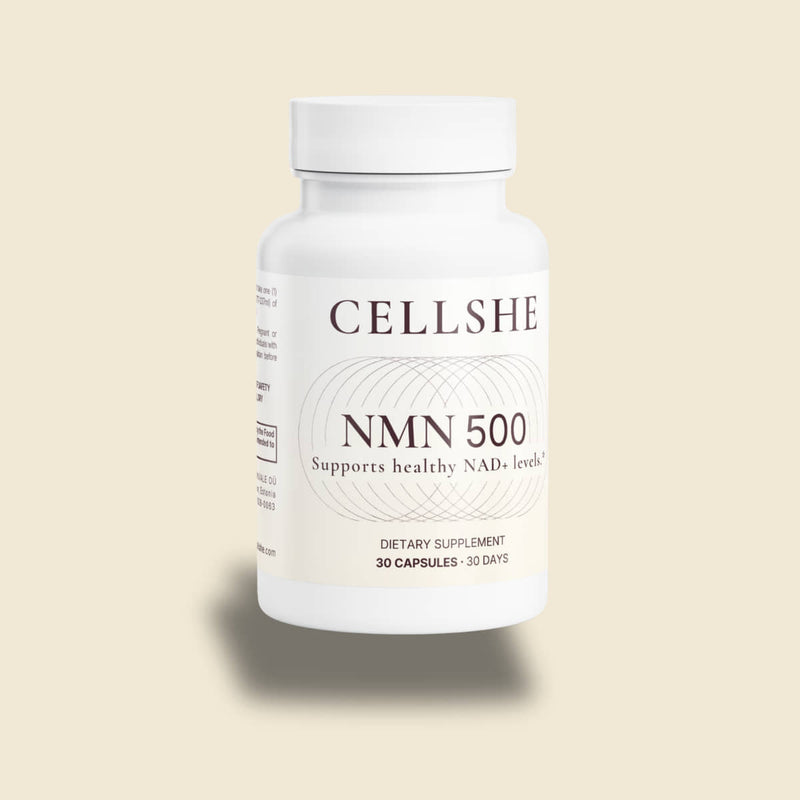

No human evidence currently shows that NAD+ IV therapy or direct NAD+ injections produce better healthy-aging outcomes than oral options. IV administration puts NAD+ directly into the bloodstream, but that does not prove superior delivery into cells or better long-term health effects. Human IV evidence is still limited to small pharmacokinetic and tolerability studies, plus disease-specific research that cannot be generalized to wellness use.[1][2][3]
Oral NMN and nicotinamide riboside, or NR, have stronger human evidence for raising NAD-related blood markers. Their effects on physical function, metabolism and other health outcomes are mixed. A new 2026 trial also found an intracellular NAD response after five days with one modified oral NAD+ formulation. That finding is formulation-specific and cannot be transferred to ordinary NAD+ capsules.[1][4]
Start with the molecule, not the delivery claim
“NAD+ IV,” “NAD+ injection” and “oral NAD+” sound like three versions of the same treatment. They are not necessarily the same exposure.
An IV can contain direct NAD+ or a precursor such as NR. An injection sold under the NAD+ label may contain direct NAD+ or another NAD-related compound. Oral products can contain direct NAD+, NMN, NR or a blend. Before comparing routes, identify the exact molecule and formulation.
If you need the basic biology first, read what NAD+ is and what it does. If you are comparing oral products rather than routes, our NAD+ supplement guide covers that separate question. Explore the full NMN evidence in our NMN for Women guide.
CELLSHE ROUTE EVIDENCE MAP
What each NAD+ route has actually shown in humans
| Route or product type | Human evidence directly shows | It does not establish | Evidence boundary |
|---|---|---|---|
| Direct NAD+ IV | A small 2019 pharmacokinetic pilot tracked NAD+ and metabolites during a six-hour infusion. A 2026 commercial retrospective study reported route-specific tolerability during four 500 mg infusions. | Better intracellular delivery, better aging outcomes or superiority over oral supplementation. | Limited human PK and tolerability evidence |
| Direct NAD+ injection, including IM or SC | Peer-reviewed wellness outcome evidence remains very sparse. A 2026 preprint reported early safety data from small direct NAD+ injection groups across IM, IV and SC routes. | Long-term safety, optimal dosing or better outcomes than oral options. | Preliminary, partly non-peer-reviewed evidence |
| Oral NMN or NR | Multiple randomized human trials show increases in blood NAD-related measures. Short-term tolerability is better characterized than for direct parenteral NAD+. | A guaranteed improvement in energy, function, lifespan or another clinical outcome. | Stronger biomarker evidence, mixed outcome evidence |
| Modified oral direct NAD+ formulation | A 2026 five-day randomized trial of LathMized® NAD+ reported higher whole-blood intracellular NAD versus placebo while plasma NAD did not rise. | That ordinary direct NAD+ capsules behave the same way, or that the biomarker change improves long-term health. | Formulation-specific short-term RCT |
| Conventional direct oral NAD+ | Modern human evidence is much thinner than the evidence for oral NMN and NR. | Absorption, intracellular exposure or clinical effects based on a different proprietary formulation. | Insufficient for broad route claims |
Sources: Gallagher & Emmanuel 2026; Grant et al. 2019; Reyna et al. 2026; Kornilov et al. 2026; Martens et al. 2018; Conze et al. 2019; Nkrumah-Elie et al. 2026 preprint.[1][2][3][4][5][6][7]
What does NAD+ IV therapy actually do in human studies?
The best place to start is not a clinic claim. It is the direct human pharmacokinetic evidence.
In a 2019 pilot, eight healthy men received 750 mg of NAD+ over six hours while three received saline. Plasma NAD+ did not rise during the first two hours. The researchers concluded that infused NAD+ was being rapidly removed from plasma and metabolized during that period. Plasma NAD+ later increased as the infusion continued.[2]
That study answers a narrow question about the fate of infused NAD+. It did not measure whether intact NAD+ reached a target tissue. It also did not test function or healthy-aging outcomes. The study was very small, and the authors disclosed clinic and NAD+ industry ties.[2]
A 2026 retrospective study adds useful tolerability data. Six clients received four consecutive 500 mg NAD+ infusions and eight received IV NR. Every person in the NAD+ group reported moderate to severe symptoms during infusion, including gastrointestinal symptoms, increased heart rate and chest pressure. Those symptoms resolved when the infusion ended. The NAD+ group also had longer average infusion times, about 97 minutes versus 37 minutes for NR.[3]
Those findings should not be converted into a universal side-effect rate. The sample was tiny and the study was retrospective. Clients controlled the flow rate as tolerated. The investigators were also employed by the commercial wellness company whose records were analyzed.[3]
Why can two IV reports sound so different? The 2019 pilot used a slow six-hour infusion and reported no adverse events. The 2026 commercial study used a different protocol and recorded frequent infusion symptoms. Route alone does not define tolerability. Dose, concentration, infusion rate, formulation, patient selection and reporting method can all change the result.[2][3]
Does IV NAD+ have any randomized clinical evidence?
Yes, but context matters. A randomized trial in 180 patients with heart failure caused by ischemic cardiomyopathy tested 10 mg/day of IV NAD+ for seven days alongside standard medical treatment. It reported a greater improvement in left ventricular ejection fraction at one month than placebo.[8]
That is disease-specific treatment research in people with diagnosed heart failure. The dose, population, clinical setting and outcomes are far removed from a wellness infusion. It cannot establish that a clinic dose used for general wellness improves energy, cognition, exercise capacity or healthy aging.
A 2026 systematic review reached the same broader boundary. It found no eligible IV or intramuscular direct NAD+ outcome trials for anti-aging or wellness among the peer-reviewed studies it reviewed through October 2025.[1] A newer 2026 narrative review was accepted in August. It also concluded that routine IV NAD+ wellness use lacks sufficient clinical evidence. Long-term safety and efficacy are not established.[9]
Are NAD+ injections better than pills?
There is no peer-reviewed human evidence showing that direct NAD+ injections produce better wellness or healthy-aging outcomes than oral NAD-related supplements.[1]
Subcutaneous and intramuscular injections bypass the gastrointestinal tract. That fact describes the route. It does not prove how much intact NAD+ reaches a given tissue, how long any change lasts, or whether a clinical outcome improves.
Direct injection evidence remains early. A 2026 medRxiv preprint reported preliminary safety findings from pilot trials that included small direct NAD+ groups given intramuscular, intravenous or subcutaneous injections. Because that report is a preprint, it has not completed peer review and should not be treated as settled evidence.[7]
Until powered peer-reviewed studies report outcomes, marketing claims that an NAD+ shot is more effective than a pill are ahead of the evidence.
Oral evidence is strongest for precursors, not for every product labeled NAD+
Oral NMN and NR have a larger human trial base than direct NAD+ IV or direct NAD+ injections for wellness. That does not mean every oral product is equivalent.
In a randomized crossover trial, six weeks of oral NR increased NAD-related metabolites in healthy middle-aged and older adults. It was well tolerated.[5] Another randomized trial tested 100, 300 and 1,000 mg/day of NR for eight weeks. Whole-blood NAD+ increased with dose, while adverse events did not differ significantly from placebo.[6]
For NMN, a 2026 systematic review and meta-analysis included 15 randomized trials. Ten contributed to the safety analysis. Across studies lasting 14 days to 24 weeks, oral NMN did not show a clear increase in overall adverse events, serious adverse events, withdrawals or liver enzyme abnormalities. The same review found no broad metabolic benefit across several common endpoints.[10]
The broader 2026 route review found consistent biochemical target engagement with oral NR and NMN. Functional, metabolic, vascular and other health outcomes were more mixed and often endpoint-specific.[1]
If you want the clinical-outcome question rather than the route question, see NAD+ benefits and the human evidence. If you want to understand why a higher blood marker is not automatically an anti-aging effect, our NAD+ levels by age analysis separates biomarkers from health conclusions.
A 2026 direct oral NAD+ study changes one part of the picture
Older summaries often treat direct oral NAD+ as if there were no meaningful human absorption data at all. A 2026 randomized Phase 0/1b trial now adds an important exception.
Sixty healthy adults aged 45 to 75 were randomized in a five-day trial of a modified direct NAD+ formulation called LathMized® NAD+. The primary analysis included 50 participants. Whole-blood intracellular NAD was 53% higher versus placebo on Day 6, while plasma NAD did not increase.[4]
The result is useful, but narrow. The formulation is proprietary, the intervention lasted five days, the primary endpoints were biomarkers, and the study had company funding and author financial ties. It does not show that a conventional NAD+ capsule has the same absorption profile. It also does not prove a long-term health benefit from the measured intracellular change.[4]
Does bypassing digestion make IV NAD+ more effective?
Not on the evidence needed to make a health-outcome claim.
Putting a compound into a vein gives direct access to the circulation. That is different from proving that the intact compound enters the cells you care about, reaches them in a superior amount, or improves a meaningful outcome.
The 2019 IV pharmacokinetic study is a good example. Even with direct infusion, plasma NAD+ did not simply rise in proportion to what entered the vein. The infused molecule was rapidly removed from plasma and metabolized during the early part of the infusion.[2]
The new oral LNAD+ trial points in the opposite direction of another common assumption. Plasma NAD did not rise, while the study reported a whole-blood intracellular increase. That does not make the oral formulation “better.” It shows why plasma exposure, cellular measurements and clinical outcomes are separate endpoints.[4]
This is why a simple route ranking such as “IV 100%, injection next, pills last” is not a valid clinical evidence hierarchy.
How do the safety questions differ by route?
Safety should be compared using the exact exposure and the actual delivery procedure.
- Direct NAD+ IV: infusion symptoms can occur, and their frequency may depend heavily on the protocol. Published long-term wellness safety data are lacking.[3][9]
- Direct NAD+ injections: human evidence is still too sparse to define a reliable long-term adverse-event profile. Sterility, compounding quality and injection-related risks also matter.[7][11][12]
- Oral NMN and NR: short-term tolerability is supported by multiple randomized trials, but those studies do not establish multi-year safety for every population.[5][6][10]
- Modified direct oral NAD+: the 2026 LNAD+ study provides five-day formulation-specific safety and biomarker data, not a class-wide long-term safety conclusion.[4]
For the broader molecule-by-molecule safety review, including cancer questions and oral side effects, see Can NAD+ Be Harmful?
For IVs and shots, product quality is part of the evidence question
Clinic-administered NAD+ products may be compounded rather than FDA-approved finished drugs. FDA states that compounded drugs are not FDA-approved, which means the agency does not verify their safety, effectiveness or quality before marketing.[11]
FDA issued a NAD+-specific sterile-compounding reminder after learning that some compounders were using food-grade NAD+ to make intravenous products. The agency said food-grade ingredients are not suitable for sterile compounding without appropriate processing because of microbial and endotoxin contamination risk. FDA also reported adverse events after NAD+ injectable drugs, including severe chills, shaking, vomiting and fatigue, with some patients requiring medical treatment.[12]
FDA’s 2026 503A bulk-substances list places nicotinamide adenine dinucleotide in Category 1, meaning it is a bulk substance under evaluation for use in compounding under that framework. Category 1 is not FDA approval of NAD+ or of a compounded NAD+ product.[13]
If you are considering an NAD+ IV or injection, ask the provider:
- What exact molecule and formulation will be administered?
- Is the finished product compounded, and which pharmacy or outsourcing facility made it?
- What dose and administration rate will be used?
- Which human study matches that molecule, route and protocol?
- What endpoint is the provider claiming the treatment changes?
- How are infusion or injection reactions monitored and managed?
Those questions do not tell you whether treatment is right for you. They tell you whether the claim being made can be traced to evidence that actually matches the product.
So which route has the best evidence?
If the question is which route is best proven to raise NAD-related blood biomarkers, oral NMN and NR have the most developed peer-reviewed human evidence.[1][5][6]
If the question is which route produces the best healthy-aging, energy, cognitive or performance outcome, current human evidence does not provide a winner. Oral precursor outcomes are mixed, direct IV wellness outcome trials remain inadequate, and direct injection evidence is earlier still.[1][9]
If the question is whether IV administration guarantees superior cellular exposure, current evidence does not establish that either. Bloodstream delivery, tissue uptake and health outcomes are different measurements.
That is the useful comparison in 2026. Match the evidence to the exact molecule, formulation, route and endpoint before judging a delivery claim.
How CELLSHE reviewed the route evidence
This article prioritizes peer-reviewed human evidence that directly matches the route being discussed. We used a 2026 PRISMA-guided systematic review to map the field. We then checked primary studies for direct IV NAD+, oral NR, oral NMN and modified direct oral NAD+.[1]
We kept disease-specific IV research separate from wellness evidence. We also kept preprints separate from peer-reviewed publications and treated the new LNAD+ trial as formulation-specific. FDA material was used for compounding and product-quality context, not as evidence of efficacy.
Scientific references
- Gallagher C, Emmanuel OO. (2026). NAD+ supplementation for anti-aging and wellness: A PRISMA-guided systematic review of preclinical and clinical evidence. Ageing Research Reviews. PMID: 41655607. DOI: 10.1016/j.arr.2026.103057.
- Grant R, Berg J, Mestayer R, et al. (2019). A Pilot Study Investigating Changes in the Human Plasma and Urine NAD+ Metabolome During a 6 Hour Intravenous Infusion of NAD+. Frontiers in Aging Neuroscience. PMID: 31572171. DOI: 10.3389/fnagi.2019.00257.
- Reyna K, Heinzen G, Patel N, et al. (2026). Intravenous infusion of nicotinamide adenine dinucleotide (NAD+) versus nicotinamide riboside (NR): a retrospective tolerability pilot study in a real-world setting. Frontiers in Aging. PMID: 41704678. DOI: 10.3389/fragi.2026.1652582.
- Kornilov SA, Hastings WJ, McGrath LF, et al. (2026). Oral LNAD+ rapidly elevates whole blood intracellular NAD and metabolic flux without elevating plasma NAD: evidence from a randomized controlled trial. GeroScience. PMID: 42530810. DOI: 10.1007/s11357-026-02399-1.
- Martens CR, Denman BA, Mazzo MR, et al. (2018). Chronic nicotinamide riboside supplementation is well-tolerated and elevates NAD+ in healthy middle-aged and older adults. Nature Communications. PMID: 29599478. DOI: 10.1038/s41467-018-03421-7.
- Conze D, Brenner C, Kruger CL. (2019). Safety and Metabolism of Long-term Administration of NIAGEN (Nicotinamide Riboside Chloride) in a Randomized, Double-Blind, Placebo-controlled Clinical Trial of Healthy Overweight Adults. Scientific Reports. PMID: 31278280. DOI: 10.1038/s41598-019-46120-z.
- Nkrumah-Elie Y, Kwon J, Simpson S, et al. (2026). Preliminary Safety Analysis of Two Pilot Clinical Trials Involving Injections of Niagen®, Nicotinamide Riboside Chloride. medRxiv preprint. DOI: 10.64898/2026.04.28.26352007. Not peer reviewed at the time of this review.
- Yu X, Xu J, Cao J, et al. (2026). Effect of Nicotinamide Adenine Dinucleotide on Heart Failure Caused by Ischemic Cardiomyopathy: A Randomized, Placebo-Controlled Trial. American Journal of Cardiovascular Drugs. PMID: 40954388. DOI: 10.1007/s40256-025-00764-7.
- Alangari A, Arif J, Al Qureshah F, Alkhodairy F. (2026). Narrative Review of Intravenous NAD+ and NAD+ Precursors in Wellness and Translational Medicine. Frontiers in Aging. Accepted August 18, 2026. DOI: 10.3389/fragi.2026.1887175.
- Yang W, Huang J, Tang Z, Chen C, Sun Y. (2026). Safety and Metabolism-Related Outcomes of Oral Nicotinamide Mononucleotide Supplementation in Adults: A Systematic Review and Meta-Analysis. Nutrients. PMID: 42514320. DOI: 10.3390/nu18142251.
- U.S. Food and Drug Administration. Compounding and the FDA: Questions and Answers. Accessed September 2, 2026. FDA source.
- U.S. Food and Drug Administration. FDA reminds compounders to use ingredients suitable for sterile compounding. October 30, 2024. FDA source.
- U.S. Food and Drug Administration. Bulk Drug Substances Nominated for Use in Compounding Under Section 503A, Category 1: Bulk Drug Substances Under Evaluation. Updated April 22, 2026. FDA list.
Editorial note: This article is educational and does not provide individual medical advice. IV and injectable products involve clinical decisions, product-quality considerations and route-specific risks that should be reviewed with a licensed health professional who knows your medical history.